Flamenco
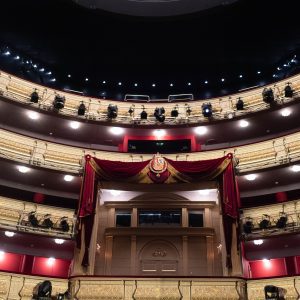
I wanted to see a flamenco show while I was in Madrid and the one I went to was highly rated and close to my hotel. An evening of flamenco in Madrid is an experience that immerses you in the heart and soul of Andalusian culture. As the first notes of the guitar ring out, the air fills with an electric energy, drawing you into the world of passionate rhythms and intense emotion. The setting was cave-like, great for the acoustics. The dancers, with fiery eyes and graceful yet powerful movements, seem to pour everything into every step, the click of their heels echoing like thunder.
Spain – a few from Barcelona
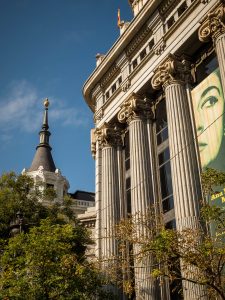
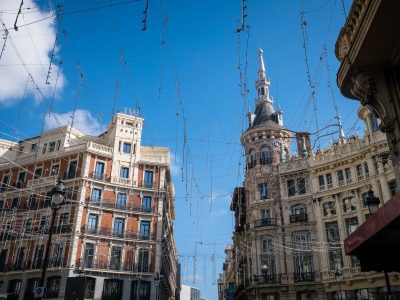
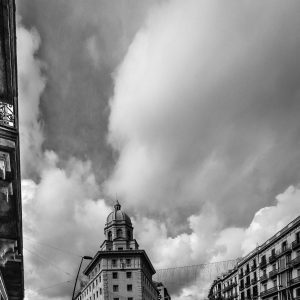
I just returned from a pretty awesome trip to Spain, ostensibly to see the “Caravaggio” at the Prado in Madrid. More to come on that. My sleep schedule is off so I decided to import all of my camera photos and start editing a few. I will post food in a separate post but Caelis was fantastic as were several local small restos near my hotel in the Eixample district, just north of the old Gothic quarter. I also included some pics from MOCA where Banksy, Basquiat and Kusama can be found, quite the treat! The Sagrada Familia was fantastic although incredibly busy with crowds. I couldn’t imagine it in the summer tourist season. I liked the Picasso gallery but, TBH, I found its selection to be limited to his Blue period. The various “views” of Velasquez’s Las Meninas at the Prado were, however, sublime. The architecture of the city is amazing, not just the churches but also the various buildings that you see just wandering down the streets. The Gaudi buildings were pretty spectacular too.
Gorki, Monkman, midJourney & ChatGPT
In his influential book Painting and Experience in Fifteenth-Century Italy, Michael Baxandall explores how this specific scene of The Annunciation serves as a lens through which to understand broader themes of Renaissance art, including perspective, naturalism, and the relationship between the viewer and the artwork. As someone who grew up with an Annunciation and a Last Supper in the living room, these two compositions form important parts of western visual culture and iconology, in addition to images of Mary as theotokos in the Eastern visual cultures for people like Gorky.
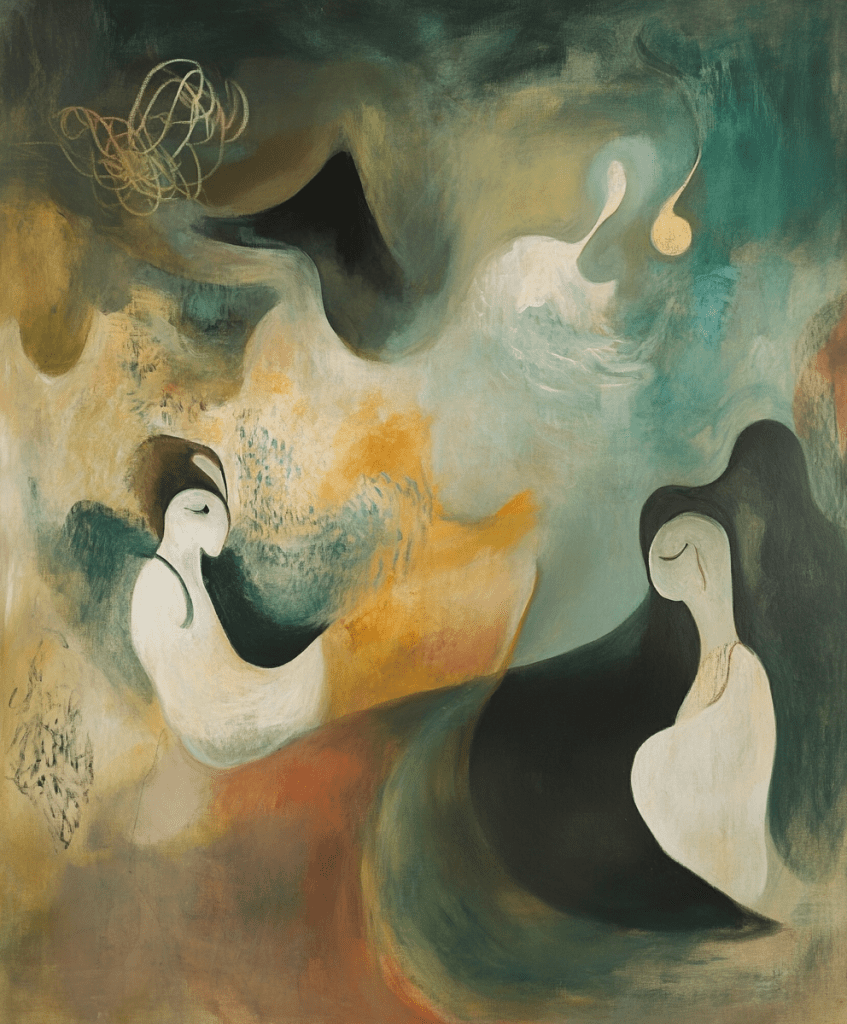
I have been working on both the prompts and the images for the past several days but here is my Annunciation from Arshile Gorky and Kent Monkman. It took many iteration of both text prompting in my language model and many iteration in midJourney. I won’t bore you with the details but I wanted to blend the style with the symbology or the language that the artist used in their work. The colouring is all from the text to image application.
In the Gorky I was going for his later bio-organic style and it was the lines and shapes in the top that reminds me of the Dove and the verticality of the “rays of grace” that are found in the western iconography in addition to that wonderful dark triangle that reminds one of the room in the background, another symbol in the western tradition meaning her purity of spirit.
The colours were pure Gorki, greys but with his vibrant use of colour, drawing inspiration from Byzantine mosaics and Armenian manuscripts, which imbue his abstract works with a rich, emotional depth and a connection to his cultural heritage. So many surprises, like the shapes that could be shadows? Wow!

The Monkman was more difficult but it was the AI image application that was the problem, it always wanted to put the annunciation characters front and centre as it normally does, unlike how Monkman puts characters as much smaller in the overall landscapes. I was amazed at how this image portrays the angel Gabriel as an energetic force of nature (I didn’t prompt that), moving away from the colonialist tendency to anthropomorphize religious figures (again, I didn’t prompt this).
I also love how the flowers worked themselves into the foreground and I couldn’t get the right background no matter what I did. It kept on giving me Lord of the Rings mountains 🙂

Terminator Zero: Another Franchise rebooted?
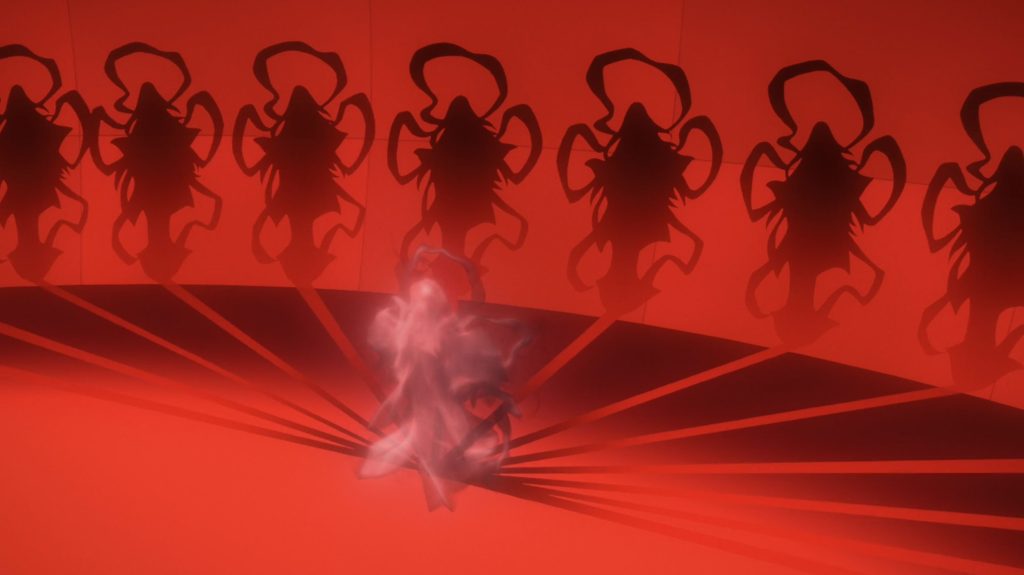
Terminator Zero offers a compelling reimagining of the iconic Terminator universe through an anime-inspired aesthetic, blending futuristic despair with philosophical musings on technology and humanity. As a contemporary entry in the franchise, it explores the interplay between technology and human fate, focusing on temporal paradoxes, technology, identity and free will.

The series is set in an apocalyptic 2022, presenting a future dominated by Skynet’s cyborg tyranny. Malcolm Lee, a data scientist whose work aims to preempt Judgment Day through the creation of an advanced AI, becomes a pivotal figure. Simultaneously, Eiko, a warrior from the future, journeys back to 1997 to thwart Skynet’s plans, weaving together a narrative that spans space-time. This duality in storytelling reflects a deeper philosophical inquiry into the nature of space-time, causality, and the cyclical nature of human struggle against technological determinism.

Visually, Terminator Zero stands as a testament to the evolution of anime’s capacity to depict intricate, dystopian landscapes. The series draws inspiration from the rich traditions of cyberpunk and speculative fiction, merging influences from classic visual styles while charting a distinct course of its own. The raw intensity of its action sequences, characterized by graphic depictions of violence, underscores the franchise’s exploration of humanity’s fragility in the face of relentless technological forces. This approach resonates with historical shifts in art and cinema, where advancements in technology have enabled more profound and unsettling portrayals of conflict and destruction.
This visual strategy illuminates the intricate relationship between technology and representation, echoing significant changes that have shaped artistic narratives over time, particularly concerning depictions of turmoil. As technology evolves, artists and filmmakers leverage these innovations to delve into the complexities of human experience during crises. Such resonances not only amplify the emotional weight of their narratives but also stimulate critical engagement with the ethical implications of these portrayals. The unsettling nature of these representations challenges audiences to confront often-hidden realities of violence and suffering, ultimately redefining our understanding of artistic expression and the very nature of conflict in contemporary society. Through this lens, we witness a transformative dialogue between media, memory, and the visceral impact of visual storytelling.

A compelling example of this dynamic interplay between technology and the portrayal of conflict is evident in the work of contemporary artist and filmmaker Hito Steyerl. In her piece How Not to Be Seen: A Fucking Didactic Educational .MOV File (2013), Steyerl employs digital media to interrogate issues of visibility and invisibility within the realms of warfare and surveillance. By blending satirical humor with stark imagery, she reveals the paradox of being seen in a world overwhelmed by visual data while simultaneously critiquing the militarization of technology and the commodification of conflict. Utilizing advanced visual techniques, such as CGI and immersive video environments, Steyerl not only underscores the disturbing realities of modern warfare but also encourages viewers to reflect on their complicity in the spectacle of violence. Her work exemplifies how technological advancements in visual media facilitate profound and unsettling explorations of societal issues, compelling audiences to reconsider their relationship with the images that dominate contemporary discourse.

However, this Terminator series’ narrative unfolds with a certain rigidity. Malcolm’s philosophical exchanges with Kokoro delve into the ethical implications of AI and humanity’s place in the cosmos, yet these dialogues occasionally veer into the abstract, distancing themselves from the visceral urgency of the story. This dynamic reflects a broader discourse in media theory about the balance between intellectual depth and emotional engagement in visual storytelling. The philosophical underpinnings of Malcolm’s and Kokoro’s debates, while intellectually stimulating, sometimes overshadow the narrative’s emotional core.
Eiko’s role as the protector of the past introduces a fresh perspective in Terminator Zero, yet her storyline struggles to integrate seamlessly with Malcolm’s narrative. The collision of these distinct arcs, while visually striking, ultimately lacks the narrative cohesion needed to fully engage the audience. This disjunction underscores a recurring challenge in reimagining established franchises: balancing the essence of the original while incorporating novel elements without sacrificing narrative coherence.

Despite these challenges, Terminator Zero succeeds in re-contextualizing the franchise within a new medium and aesthetic framework. The series presents a visually arresting and thematically rich exploration of familiar motifs, drawing on the iconic themes of the franchise while infusing them with contemporary relevance. However, it remains somewhat constrained by its adherence to formulaic visual storytelling and a tendency towards emotional detachment. In its ambitious attempt to merge philosophical inquiry with futuristic action, the series offers an intriguing, albeit imperfect, reflection on the enduring tension between humanity and technology begun years ago in the future. This complex interplay invites audiences to ponder deeper questions about the implications of technological “advancement” while grappling with the emotional stakes of its characters’ journeys.
Exploring Friendship and Worldviews in Akira Kurosawa’s Dersu Uzala
Akira Kurosawa’s Dersu Uzala (1975) is a masterful exploration of friendship and the complex interplay between contrasting worldviews. Based on the memoirs of Russian explorer Vladimir Arsenyev, the film beautifully captures the bond between Dersu Uzala, a Goldi hunter, and Arsenyev as they traverse the breathtaking yet unforgiving Siberian wilderness. This relationship unfolds against a backdrop of stunning cinematography, highlighting not only the vastness of nature but also the philosophical inquiries that lie at the heart of Kurosawa’s storytelling. Asakazu Nakai‘s cinematography is, as always, impressive.

At its core, Dersu Uzala illustrates the deep connection between its two protagonists, rooted in respect and mutual understanding. Dersu’s profound relationship with the natural world contrasts sharply with Arsenyev’s more rational, “modern” approach to exploration. This juxtaposition serves as a commentary on the tension between traditional wisdom and contemporary thinking. As the film progresses, the friendship between Dersu and Arsenyev evolves, revealing the richness of their shared experiences and the value of embracing differing perspectives.

The evolving friendship between Dersu and Arsenyev is further illuminated by Kurosawa’s masterful cinematography, which not only captures the breathtaking beauty of the Siberian landscape but also acts as a visual commentary on their contrasting worldviews. As the characters navigate the vastness of their environment, the cinematography reflects their internal journeys, showcasing how Dersu’s intuitive understanding of nature complements Arsenyev’s rational perspective. The interplay between the two men and their surroundings emphasizes the film’s central themes: the difficulties of respecting traditional wisdom while engaging with contemporary thought and technologies. This dynamic relationship is beautifully mirrored in the expansive frames, which invite viewers to ponder the intricate connections between humanity, nature, and the differing philosophies that shape our understanding of the world.

The cinematography of Dersu Uzala plays a vital role in conveying these themes. Shot in 70mm film stock, the film immerses viewers in the grandeur of the Siberian landscape. Kurosawa’s sweeping shots and meticulous framing not only enhance the visual experience but also serve as a metaphor for the philosophical questions the film raises. The vast wilderness mirrors the emotional depth of the characters’ relationship, while the challenges they face together reflect the broader struggles of reconciling different worldviews.

While the cinematography of Dersu Uzala vividly encapsulates the film’s thematic essence, it also serves as a narrative device that deepens our understanding of the characters’ evolution. The visual artistry not only presents the stunning expanse of the Siberian wilderness but also captures the subtleties of the protagonists’ emotional landscapes. As Dersu and Arsenyev traverse this imposing terrain, the camera’s perspective shifts, reflecting their growing bond and mutual respect. This dynamic interplay between the landscape and their journey highlights the fluidity of their relationship, suggesting that navigating the complexities of nature mirrors their quest for harmony between intuition and reason. In this way, Kurosawa not only portrays their struggles but also emphasizes how embracing different worldviews can lead to personal transformation and a richer understanding of one another.

In the scene where the shadow of the tiger looms over Arsenyev’s tent, the film poignantly illustrates the cultural divide that underpins the relationship between Dersu and Arsenyev. Through Arsenyev’s voiceover, he expresses his assumption that Dersu’s claim of seeing the tiger is merely a product of his magic, revealing his skepticism and reliance on rationality. This moment encapsulates the tension between their worldviews: Dersu’s deep-rooted connection to nature and its mysteries stands in stark contrast to Arsenyev’s modern sensibilities. While Dersu’s understanding is grounded in instinct and lived experience, Arsenyev’s perspective struggles to appreciate the unseen forces that govern their environment. The tiger’s shadow serves as a haunting reminder of the unknown and the complexities inherent in the natural world, emphasizing how Dersu’s worldview, though often dismissed, offers valuable insights that challenge the harmonious narrative frequently presented by followers of modernity. Through this visual and narrative juxtaposition, Kurosawa enriches the film’s exploration of friendship amidst the vast, often inscrutable wilderness.

Through stunning visuals and poignant storytelling, Kurosawa invites viewers to contemplate the intricate relationship between humanity and nature. Dersu embodies a worldview that values intuition and instinct, whereas Arsenyev’s perspective is rooted in scientific understanding. Their journey through the wilderness becomes a metaphor for the search for balance between these opposing ideologies. As they confront the challenges of their environment, they learn to appreciate the strengths each brings to their partnership, ultimately revealing the transformative power of friendship.
As the narrative unfolds, Dersu’s departure from the settlement underscores the incompatibility of his traditional worldview with the encroaching forces of modernity. After being arrested for cutting down a tree—an act that symbolizes his deep connection to nature and the resources it provides—Dersu is thrust into a world that no longer understands his way of life. This disconnection is further accentuated by the rifle he receives, a seemingly innocuous gift that ultimately is responsible for his death. The new rifle, with its powerful scope, represents the very modernization that alienates Dersu from his environment; it transforms him from a harmonious participant in nature to a more detached observer. In this way, the tool intended to empower him becomes a catalyst for his demise, reinforcing the film’s poignant message about the fragility of traditional ways of life in the face of progress and the inherent dangers that can arise from losing touch with one’s roots.

In an era increasingly defined by modernity, Dersu Uzala stands as a compelling meditation on the necessity of understanding and honouring diverse perspectives. Kurosawa’s film not only highlights the profound bond between Dersu and Arsenyev but also invites viewers to contemplate their own relationships with nature and one another. The narrative serves as a critical lens through which we examine the tensions inherent in the dichotomy of urban and rural life, reminiscent of the broader European discourse on town versus country and emergent suburbanization in America.
Kurosawa challenges us to reflect on our own place within this landscape of change. Dersu’s journey invites us to consider the implications of progress on personal and communal identities, urging a reevaluation of what it means to coexist harmoniously with both nature and each other. In doing so, Dersu Uzala transcends its historical context, becoming a timeless exploration of the human condition, one that resonates with contemporary struggles against the backdrop of an ever-evolving world.


Homelands – Dance at the NAC
Wow! I saw Homelands last night at the NAC and I was very impressed with the production. The three dancers on the stage were behind a thin screen that they use to project images of running water and other elements of nature. At one point the dancer on the stage was duplicated 6 or 7 times on the projected screen giving the impression that the dancers were joined by ghosts on the stage. The projected images sometimes occupied the top half of the screen creating a sense of aporia between real and fantasy, presence and hauntings. Very impressive and kudos to the production and dancers!

Style References in Midjourney
The latest version of the text to image application Midjourney is pretty awesome. It includes new style and character references that are quite useful. Getting consistent results over image iteration is difficult but made easier now with a style reference (–sref). Here are some samples of cityscapes from the reference image. Very impressive. I will upload character references next. I have a few characters that I would love to use in projects but can never seem to get them quite right in a consistent fashion.

I used this as the referenced image in simple [cityname] cityscape –sref [image url]. That was it for the prompt. Results below.


Embodied Landscapes: A Dance Between Humanity and the Anthropocene
I saw my first show of the season at the National Arts Centre last night and I was quite impressed! I jump at any opportunity to view the work of Canadian photographer Edward Burtynsky, his work always places me in a state of awe and aporia. His work Natural Order, of all his work, is most profound for me, coming out after the pandemic. In isolation, Burtynsky turned his focus back to the natural landscape, creating a new series that captures the cycle of renewal from winter’s stillness to spring’s vitality, reflecting the complexity, wonder, and resilience of nature, revealing an underlying order amid apparent chaos. Taken in Grey County, Ontario, they also represent a personal journey of finding solace and meaning in nature during uncertain times. Through this selective contemplation, Burtynsky affirmed the enduring strength of the natural world, regardless of humanity’s fate. It was this affirmation that moved me.
UAQUE is a multidisciplinary collaboration between choreographer Andrea Peña & Artists, the National Arts Centre Orchestra (NAC), and Canadian photographer Edward Burtynsky. This piece reflects on the Anthropocene Epoch, exploring humanity’s impact on the planet through dance, music, and striking visuals. Burtynsky’s images are seamlessly woven into the performance, where dancers embody a journey of resilience and vulnerability, set to live music from the NAC Orchestra, conducted by (very funny and talented) Alexander Shelley, and electronic composer Eƨƨe Ran.
Andrea Peña’s choreography stands out for blending dance with industrial design, incorporating contemporary issues into her work. Known for her conceptual approach, she emphasizes a dialogue between the body and space, searching for new choreographic and aesthetic possibilities.
Burtynsky’s photographs, depicting the complex interplay between beauty and environmental crisis, engage in a dynamic conversation with the dancers. Together, they create a ritualistic space where humans and the nonhuman world coexist, inviting reflection on our relationship with the Earth.
Edward Burtynsky’s photography and Andrea Peña’s choreography converge in UAQUE to form an evocative dialogue between the human body and the altered landscapes of the Anthropocene. Burtynsky’s images, with their haunting portrayal of industrialized beauty, serve as more than mere backdrops; they are living elements that interact with Peña’s dancers, who physically embody the discord between humanity’s ingenuity and the planet’s vulnerability. Peña’s choreography amplifies the emotional undercurrent of Burtynsky’s work, transforming still images into kinetic explorations of survival, adaptation, and loss. The dancers move as extensions of the landscapes—alternating between resilience and collapse—mirroring the fragile equilibrium of the Earth itself. In this collaboration, Peña’s innovative use of space and materiality transcends traditional performance, turning the dancers into both inhabitants and architects of a world on the edge, while Burtynsky’s photographs provide a lens through which the audience can witness the consequences of human actions in visceral, moving form. Together, they create a new interdisciplinary language that blurs the boundaries between movement and stillness, art and environmental reckoning.

A Picture of Deception: OMITB episode 3
In Only Murders in the Building Season 4, Episode 3, the series continues to exhibit its distinctive charm as the central trio—Charles, Mabel, and Oliver—grapples with personal dilemmas while investigating the murder of Sazz. The episode prominently features celebrity guest stars Zach Galifianakis, Eva Longoria, and Eugene Levy, who shadow the main characters for a film adaptation of their podcast. This external scrutiny affects the trio’s self-perception: Levy’s portrayal prompts Charles to confront his insecurities, Galifianakis’s critique compels Oliver to confront his quest for validation, and Longoria’s (Mah-bel’s) brash interpretation of Mabel highlights the contrast between her methodical approach and Longoria’s chaotic energy.
The episode is particularly notable for its depiction of Mabel and Longoria’s dynamic. Longoria’s unpredictability injects humor and tension into their interrogation of Rudy, a Christmas-themed gym influencer, while Mabel maintains her methodical approach, ensuring a balanced investigative process. Meanwhile, Oliver’s interactions with Galifianakis reveal deeper aspects of his character, particularly his desire for validation beyond superficial fame.
The always awesome Detective Williams, played by Da’Vine Joy Randolph, delivers a crucial update on the investigation into Sazz’s murder. Her arrival marks a pivotal moment as she informs Charles, Mabel, and Oliver that the Feds have taken over the case, identifying a missing suspect named Jan who has fled to Florida. Williams’ authoritative presence brings a new level of urgency to the investigation, as she reveals that the shooter’s apartment belongs to the retired professor M. Dudenoff, currently in Portugal. Her interaction with the trio highlights her professional demeanor and provides essential clues that drive the narrative forward, emphasizing the escalating stakes and the broader implications of their case.
A significant plot development occurs when Charles, Eugene, and Vince discover a photograph in Vince’s apartment. This image, depicting the Westies alongside an obscured figure holding a pig, prompts speculation about the identity of the masked individual. The obscured face could potentially be Sazz or even Meryl Streep’s Loretta, and the pig may connect to Howard’s pet, suggesting additional layers to the mystery.

The episode integrates personal growth, character development, and crime-solving while maintaining a focus on the core trio’s dynamic, even amidst celebrity appearances. A key narrative twist involves the discovery that the killer may be utilizing a ham radio frequency, which heightens the sense of danger as the investigation progresses.
Charles’s investigation into Vince, or “Pink-Eye,” is enriched by Hitchcockian elements, particularly through the Hitchcock book on Vince’s mantle. This reference to Vertigo—a film that delves into themes of obsession, identity, and impersonation—parallels Charles’s own existential quest and the unsettling potential of being targeted. The allusion to Vertigo not only enhances the episode’s noir atmosphere but also deepens Charles’s introspective journey, adding to the thematic complexity of the series.
The line between reality and fiction becomes intriguingly blurred, suggesting that the entire season might be unfolding as part of the movie being filmed within the show. The twist with Sazz’s apparent demise could echo a Vertigo-like scenario, where her impersonation of Charles mirrors Judy’s deception in the film. Just as Judy impersonated Madeleine Elster in an elaborate murder scheme, Sazz might be enacting a similar ruse. This revelation invites us to question whether the dramatic events are genuine or simply scripted elements designed to enhance the movie’s narrative. Are we witnessing a real tragedy, or is it all part of an elaborate plot, with Sazz’s actions reflecting the haunting manipulations of Vertigo? The show skillfully plays with this ambiguity, making us constantly question what’s real and what’s merely part of the film’s intricate storyline.

The line between reality and fiction becomes intriguingly blurred, suggesting that the entire season might be unfolding as part of the movie being filmed within the show. Could it be that every twist, including Sazz’s apparent demise, is actually a scripted element of the film? This scenario raises intriguing questions about the nature of what we’re watching. Are the dramatic events genuine, or are they all part of an elaborate ruse designed to enhance the movie’s storyline? The show masterfully plays with this ambiguity, making us continually question what’s real and what’s just a part of the film’s narrative.