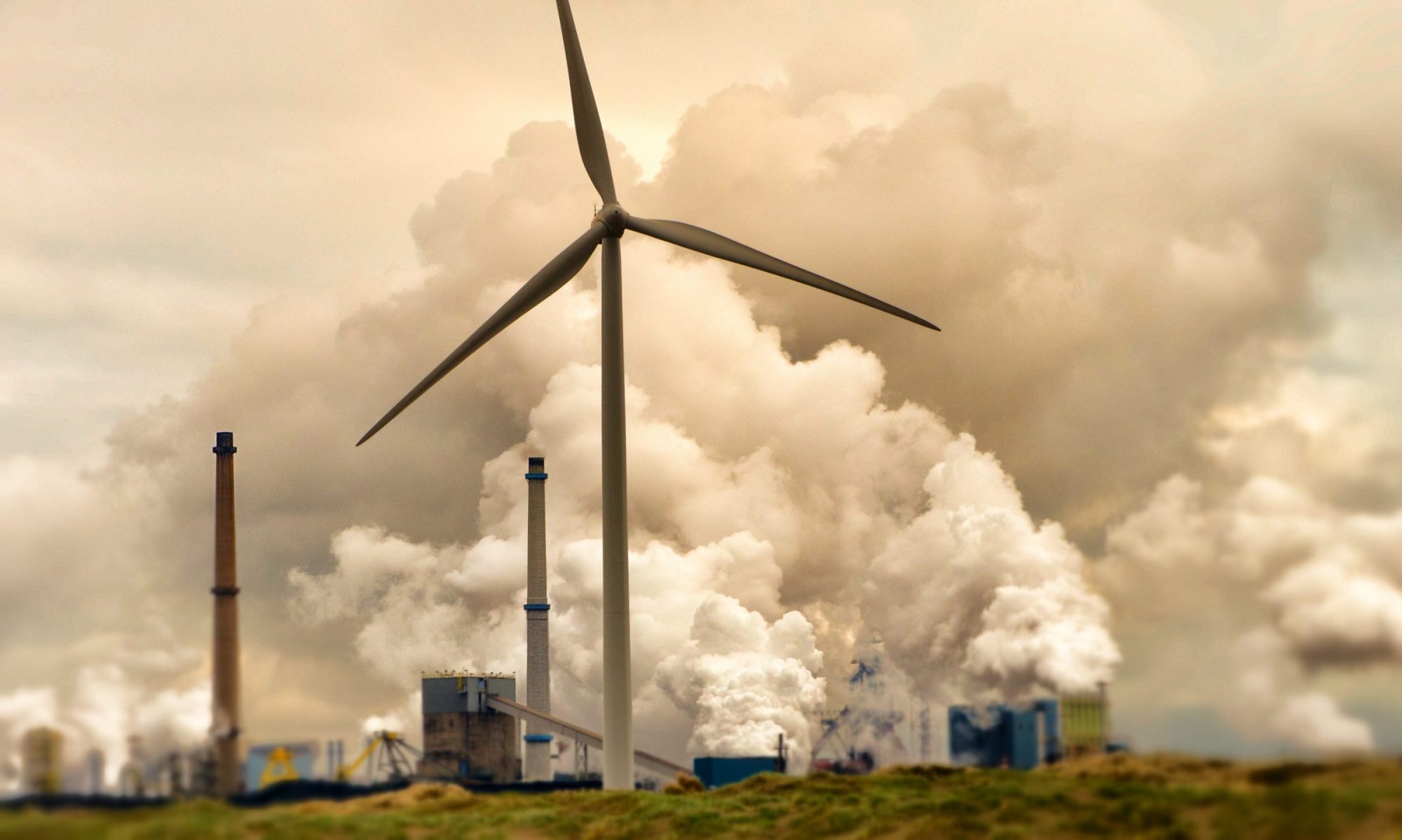
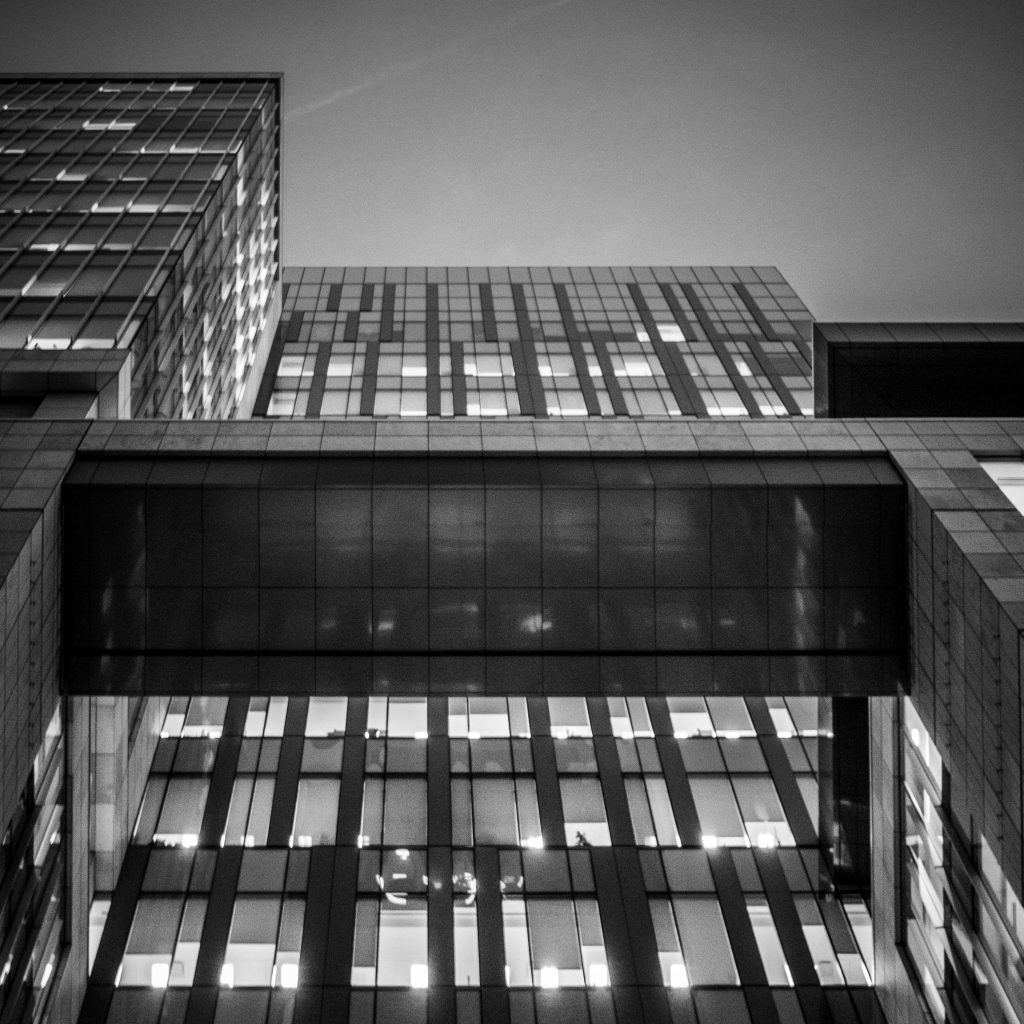
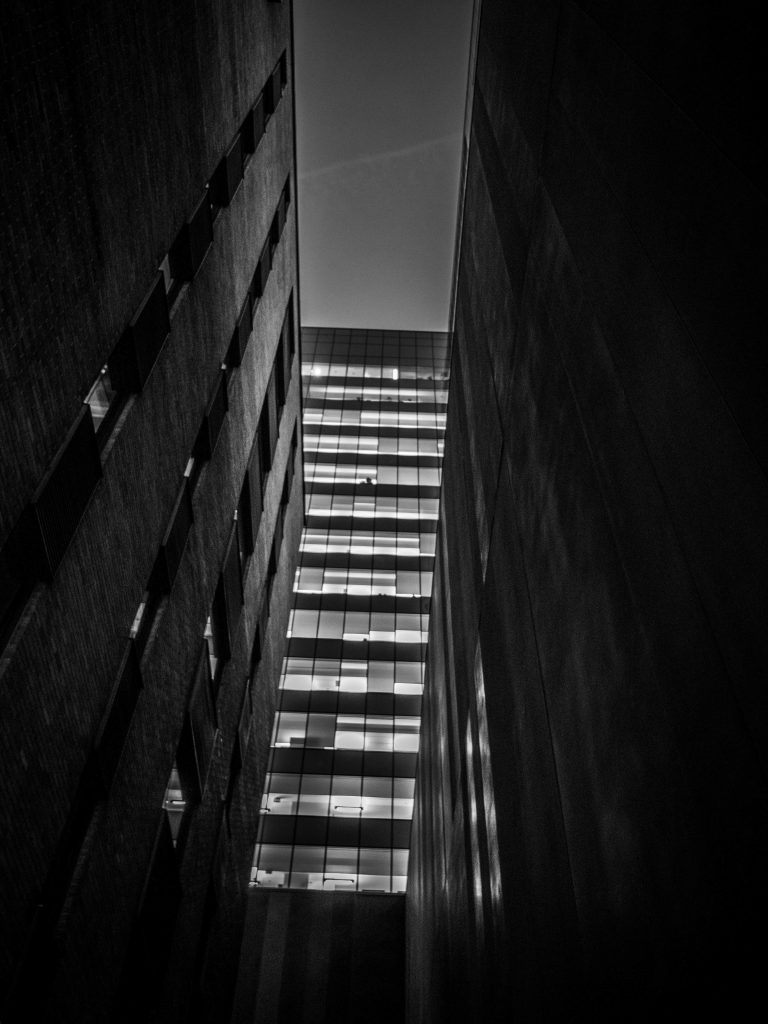
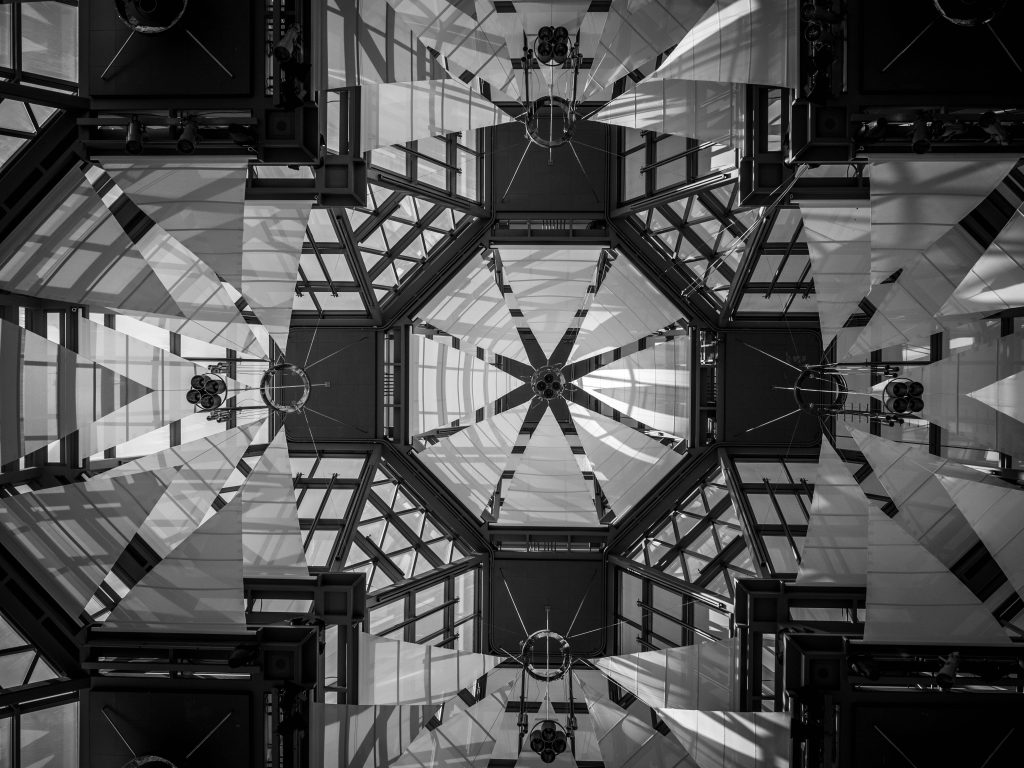
Montreal’s architecture is a site where history and memory converge, with its blend of neoclassical, modernist, and postmodern structures reflecting the city’s layered cultural narratives. In monochrome, the play of light and shadow accentuates this tension between past and present. Shadows here are not simply absence but a marker of time, revealing the subtle ways in which architecture both preserves and reinterprets the city’s evolving identity and historical consciousness. And don’t get me started about the food!
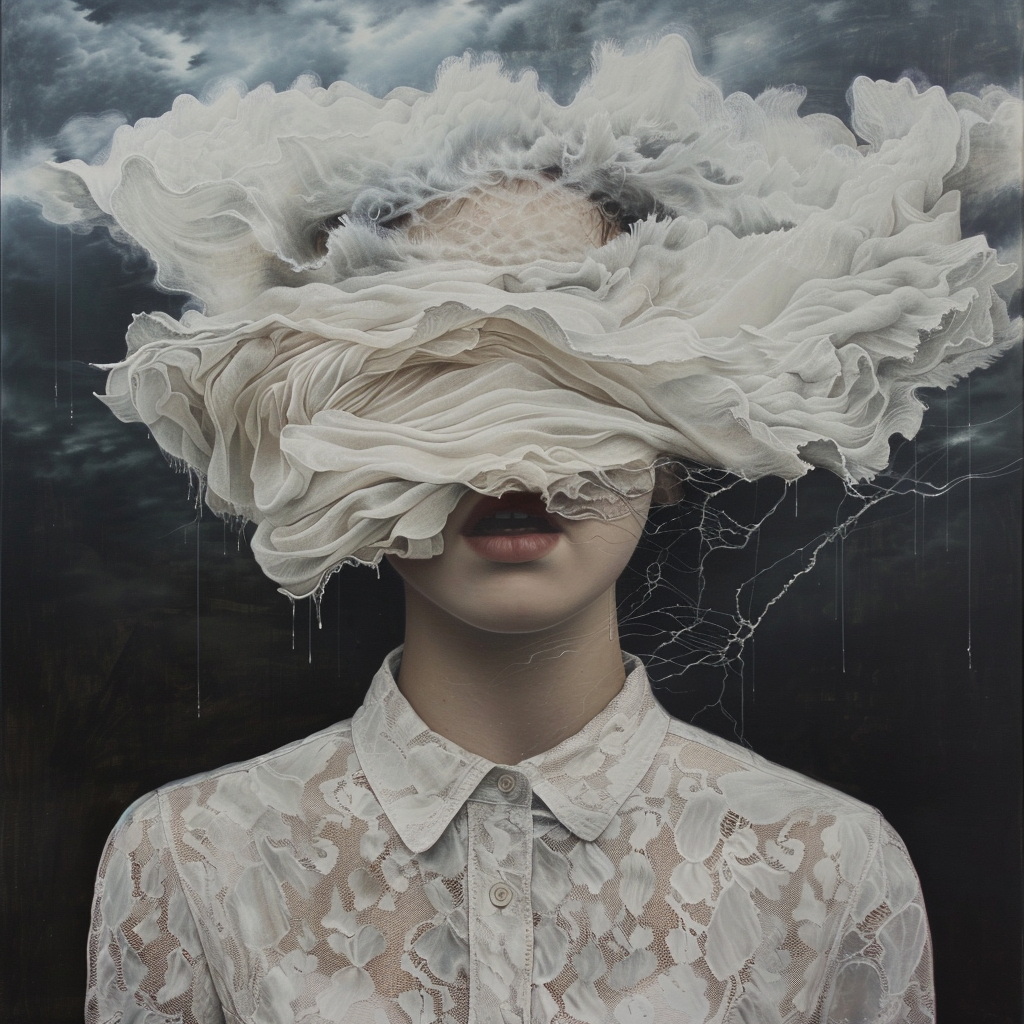
There was a time when images were evidence. A medieval map was not just a representation but a claim to knowledge, an argument about how the world was structured. A Renaissance painting revealed divine order, a photograph proved that something was. Today, we face a new kind of image—one that does not record but generates, one whose authority does not come from witnessing reality but from statistical inference. AI-generated imagery does not document the world; it thinks the world.
For centuries, knowledge was structured around categories. Aristotle, Linnaeus, and later the Encyclopédistes built systems to organize the world, classifying nature, history, and human thought into legible hierarchies. Even with the rise of empirical science, knowledge remained something accumulated, structured, and verified through observation.
mid journey image #prompt = [coffee in St. Peter’s Square –ar1:1]
The algorithm, however, does not organize knowledge in this way. It does not categorize the world from above but learns patterns from within. Unlike an 18th-century taxonomist, an AI system does not define a tiger by its stripes or its feline characteristics—it simply processes vast quantities of data, detecting statistical correlations that allow it to recognize a tiger without ever defining it.
This is a profound shift. Knowledge, once built through observation and classification, is now generated by inference. The AI-generated image follows this logic. It does not capture a moment, as a photograph once did, nor does it interpret a subject, as a painting might. Instead, it predicts what an image should look like, based on probabilities. The result is something fundamentally different from representation: an image that emerges from a machine’s internal logic rather than from reality itself.
For centuries, images were linked to material constraints: pigments on a canvas, light on film, a chemical process that left behind a physical trace. Even digital images, while infinitely replicable, still maintained a relationship to a source—a photograph taken, a frame captured. AI-generated imagery untethers itself from this history. It is not a copy but an invention, synthesized from a dataset of other images, none of which serve as the original.
This is not just a technological change; it is an epistemological one. If we once sought truth in the documentary image, where do we look now? If an AI can generate a face that has never existed, what happens to our belief in the evidentiary power of the portrait? And if an algorithm can create art indistinguishable from human creativity, what happens to the very idea of authorship?
We might think of AI as a historian of its own kind—one that does not preserve the past but extracts patterns from it. The great archives of human culture—museums, libraries, film reels—once functioned as repositories of collective memory. AI, trained on these vast datasets, does not remember but predicts. It does not curate the past; it recombines it.
The implications of this shift extend beyond aesthetics. In medicine, AI does not diagnose based on fixed categories but on pattern recognition, seeing correlations that escape human detection. In law, AI systems sift through precedent not to enforce continuity but to optimize decisions. Across disciplines, knowledge is becoming less about interpretation and more about computation.
Yet there is something unsettling in this. AI-generated imagery reminds us that knowledge, long thought to be something we built, structured, and controlled, may now be something we train—a vast statistical model that does not explain but predicts, does not reason but generates.
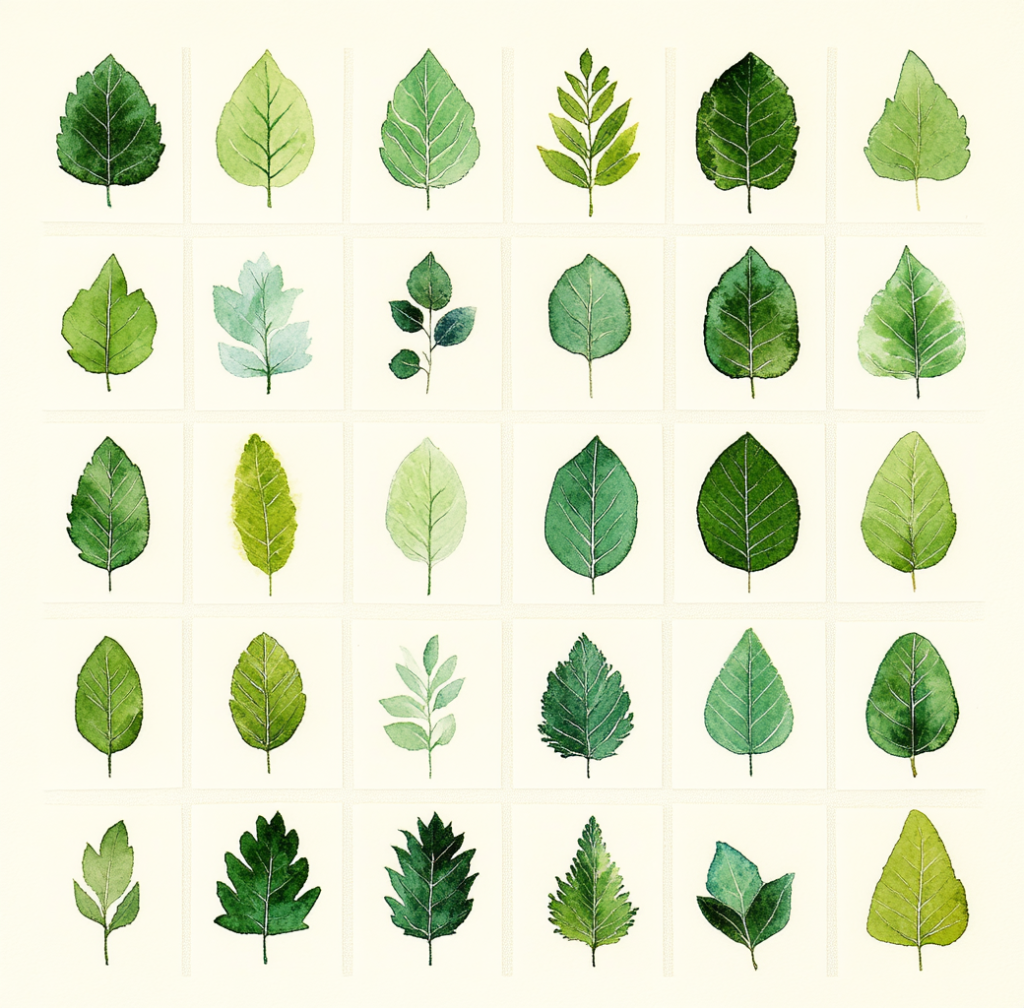
midJourney image #prompt = [grid of a single leaf –ar 1:1]
If the image was once a window onto the world, AI has made it a hall of mirrors, endlessly reflecting a logic we do not fully understand. The question is no longer whether these images are real, but rather: whose reality do they belong to?
The paradox of concrete as both the symbol of modernity and its antithesis—destruction—has been beautifully and vividly re-examined in the 2024 documentary by Viktor Kossakovsky, Architecton. The film opens with the ravaged remains of concrete structures in Ukraine, setting the stage for an exploration not only of architecture’s relationship to materiality but of its role in the broader narrative of progress and decay. Through this lens, Kazimir Malevich’s geometrically pure forms gain new resonance, shifting from abstract utopian ideals to poignant metaphors for the tension between stability and fragility inherent in all human endeavours.
The ruins of Baalbek, stark against the infrared sky, their massive columns diminished yet unwavering. Their presence in the landscape is both imposing and ghostly, a relic of human ambition that now exists in a state of suspension, neither fully intact nor wholly lost. In the documentary’s meditation on concrete and stone, Baalbek serves as a distant counterpoint—where modern concrete is cast and shaped to fit the needs of the present, these ancient stones, quarried and placed millennia ago, endure as both triumph and ruin, a reminder that all architecture, no matter how permanent it seems, is ultimately subject to time.
One striking quotation from the documentary reads: “After water, concrete is the most widely used substance on Earth.” This simple statement highlights concrete’s ubiquity and significance in shaping the modern world. Water—life’s most fundamental element—has long been the basis of human survival and connection with nature, while concrete, as the second most used material, represents humankind’s drive to dominate and define its surroundings. Yet, despite its ubiquity, concrete’s eventual decay exposes a different truth: the same forces that humans attempt to master—through architecture, engineering, and design—are ultimately beyond control. Concrete, while seemingly permanent, is just as vulnerable as the stone it mimics, subject to the ravages of time, war, and nature.
In one particularly striking image, a solitary man with a wheelbarrow is dwarfed by a massive block of stone, carved millennia ago and abandoned. This visual echoes the evocative imagery of Michelangelo’s Prisoner statues, housed in Florence’s Accademia Gallery. These figures, half-formed, trapped in their stone prison, seem to struggle towards liberation, embodying both the act of creation and the stasis of unfulfilled potential. The abandoned stone, much like these unfinished figures, occupies a space between being and non-being, between intention and entropy. The stone seems to call out for a form that has not yet been realized, just as the massive concrete structures in the documentary gesture toward what could have been—monuments of progress now succumbed to time and violence. In this way, both the material and its artistic potential exist in a state of suspended animation, caught between the historical force of its creation and the inevitable dissolution of all things.
Integral to this exploration is the use of infrared imagery, a technological choice that disrupts our traditional understanding of built structures. Infrared, often used to reveal hidden heat signatures, transforms concrete buildings into spectral forms. What was once solid, monumental, and permanent is reduced to an ethereal presence, a visual manifestation of the invisible energies and decay beneath the surface. It’s as though the material itself is attempting to communicate its vulnerability—an image of architecture that exposes itself not as a static entity, but as a system of energies, histories, and eventual dissolution.
A crucial scene in the film—an extended sequence of a massive rockslide—underscores the inherent power of stone, nature’s counterpoint to human architecture. As colossal boulders cascade down the mountainside, the camera lingers on the massive, unyielding force of the stone. This raw, natural destruction stands in stark contrast to the calculated, human-made beauty of classical architecture. The imagery here is a reminder that stone, while emblematic of permanence, is also vulnerable to the overwhelming forces of nature. This stark juxtaposition of classical ruins, once thought to be eternal, returning to the earth, punctuates the fragility of human ambition and the fleeting nature of monumental achievement.
The pairing of concrete and rock, two materials that symbolize permanence, with such violence and collapse speaks to their liminal nature. Both substances, when used for habitation or as symbols, straddle the boundary between human-made constructs and the natural world. They strain the traditional distinctions between subject and object, man and nature—two concepts that architecture has long worked to contain and define. Concrete, as both a building material and a symbol of modernity, offers the illusion of control over nature. Yet, it is precisely this illusion that makes it so susceptible to forces beyond our grasp. Rock, though an ancient and seemingly immutable material, can also become a harbinger of destruction when untethered from human will. These materials blur the boundaries of the architectural discourse, pointing to an inherent instability between humanity’s ambitions and the larger natural forces at play.
Concrete, though seemingly durable, is as much a material of transience as it is of permanence. The structures it creates can endure for centuries, but the very process of their construction—through human labour, environmental forces, and the inevitable decay—ensures their eventual dissolution. In this, concrete is emblematic of the human condition: the striving for permanence caught in the endless flux of change and decay.
Through this lens, the interaction between concrete and rock becomes a reflection of the tension between human intention and natural forces. These materials are not mere objects to be shaped or controlled but are agents in their own right, influencing the spaces they inhabit. When viewed through infrared, they reveal themselves not as passive backdrops but as active participants in the construction of meaning. Concrete’s malleability and rock’s permanence, when combined, create a tension that straddles the boundary between subject and object, a dialectic that architecture itself has long sought to transcend. If technologies shape our understanding of reality, then the use of infrared here forces us to confront the complex interplay between human creation and the natural world.
Malevich’s Architecton, in this context, becomes more than a study of abstract form. It serves as a blueprint for reconsidering the purpose and meaning of architecture in a time when the very materials that define our spaces are constantly in flux. If the built environment is constantly being reshaped by forces both seen and unseen, then architecture is not a static monument but an ongoing negotiation between humanity and the materials that constitute it. And in the suspended forms of stone and concrete, we find a reminder that art, too, lies at the intersection of creation and destruction—a space where form is constantly being struggled into existence, only to eventually fade back into the material world.
The argument that multimodal AI collapses the text-image distinction is, at first glance, compelling. However, this claim relies on an implicit assumption that such a distinction was ever stable or clearly demarcated. A closer examination reveals that AI’s generative processes do not so much “collapse” the distinction as they do mechanize an already-existing instability—one that has long been explored through avant-garde literary and artistic practices, particularly in asemic writing.
Throughout the 20th century, artists and writers repeatedly disrupted the supposed boundary between text and image. Dadaist collage, Surrealist automatic writing, and concrete poetry all foregrounded the materiality of language, demonstrating that text could function visually as much as linguistically. In Lettrism, pioneered by Isidore Isou in the 1940s, letters were untethered from conventional phonetic or semantic meaning, transformed into visual compositions. Henri Michaux’s asemic ink drawings similarly dissolved the distinction between writing and mark-making, demonstrating that the act of inscription need not resolve into legibility. These historical precedents complicate the article’s central claim: rather than producing an unprecedented collapse, AI merely accelerates and mechanizes a longstanding artistic impulse to question the division between reading and seeing.
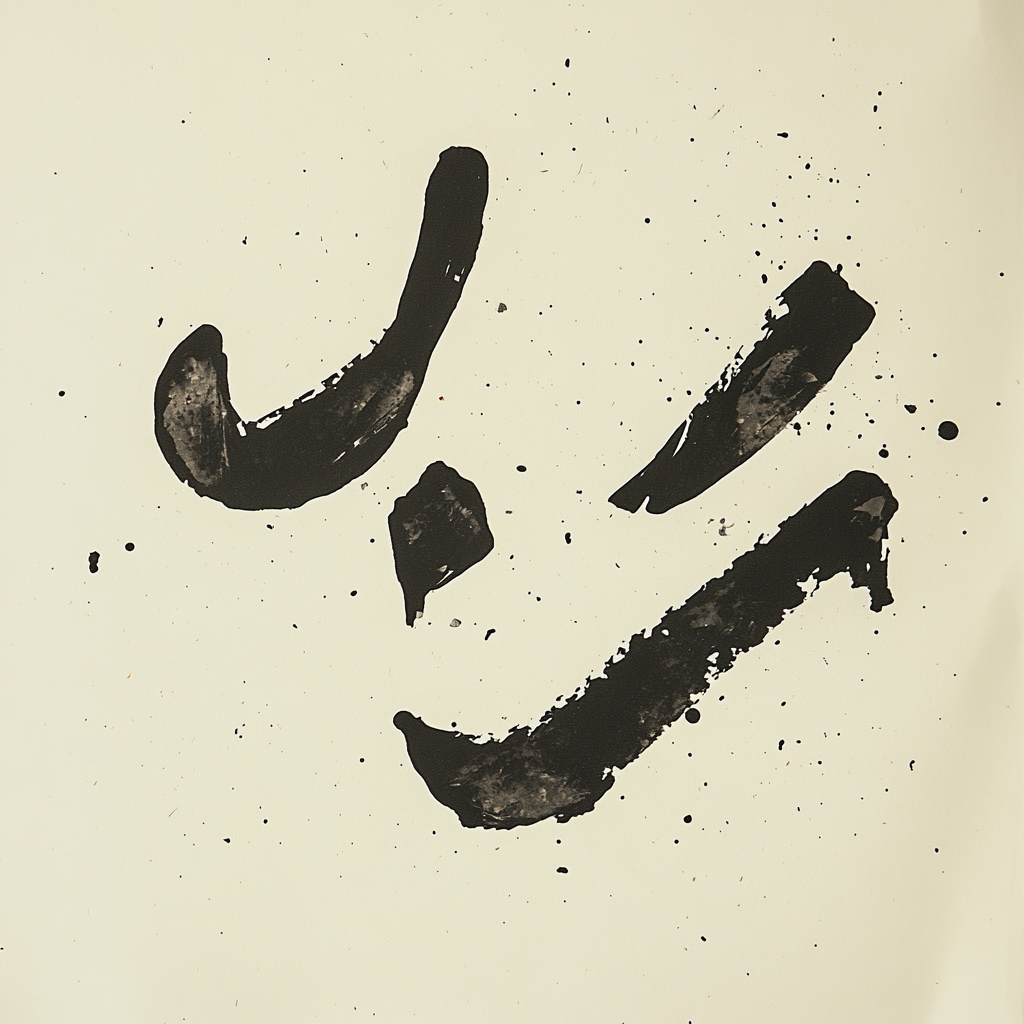
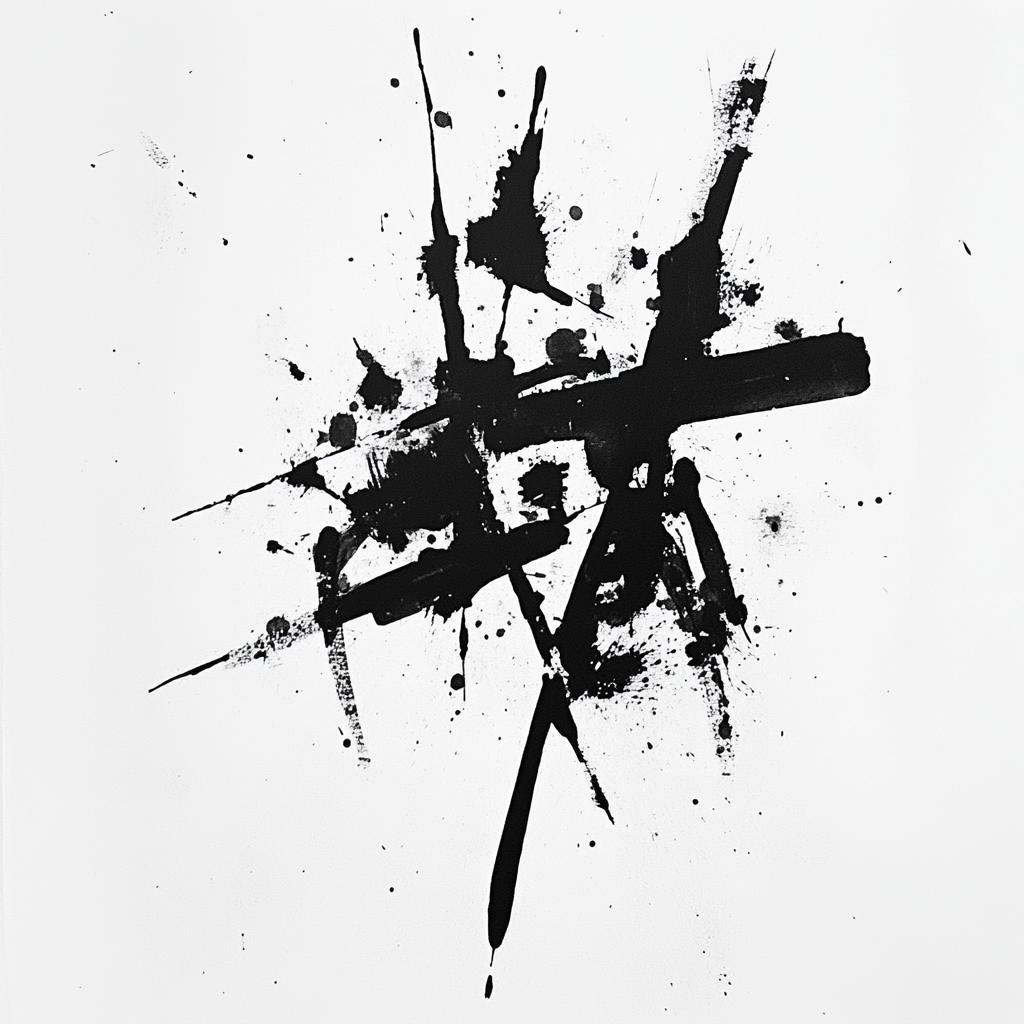
Asemic writing resists the tyranny of meaning, inviting the reader into an interpretative space where language dissolves into pure form.
If asemic writing operates through intentional illegibility, inviting interpretation while resisting definitive meaning, AI-generated text-image hybrids do not resist meaning so much as they produce an excess of it. The logic of machine learning generates outputs that are overdetermined by probabilistic associations rather than by authorial intent. Cy Twombly’s gestural inscriptions, for instance, suggest meaning without fully disclosing it; their power lies in their resistance to linguistic capture. By contrast, AI-generated multimodal outputs do not refuse meaning but generate an abundance of semiotic possibilities, saturating the interpretative field. The article does not fully account for this distinction, treating AI’s multimodal capabilities as a collapse rather than an overproduction, a shift from resistant ambiguity to computational fluency.
What is most fundamentally altered by AI is not the existence of an intermediary space between text and image but the industrialization of indeterminacy itself. Asemic writing historically resists institutional legibility, positioning itself against systems of meaning-making that demand clear semiotic functions. AI, however, converts indeterminacy into a computational process, endlessly producing outputs that are neither fully readable nor wholly visual but are nevertheless monetized and instrumentalized. Where the illegibility of Chinese wild cursive calligraphy or Hanne Darboven’s sprawling numerical texts was once a site of aesthetic resistance, AI-driven multimodality turns this ambiguity into a product, systematizing what was once an act of refusal.
By severing the link between signifier and signified, asemic writing exposes the visual unconscious of text, revealing writing as an act of mark-making rather than communication.
Rather than signaling the collapse of the text-image distinction, AI-driven multimodality reveals how this boundary has always been porous. The article’s central argument overlooks the long history of artistic and literary practices that have anticipated and complicated the very phenomenon it describes. A more nuanced approach would recognize that AI does not dissolve the distinction between text and image so much as it absorbs their instability into a system that operationalizes ambiguity at scale, transforming what was once a site of aesthetic and conceptual resistance into an automated process of production.
In black and white, architecture transforms into pure form—sharp lines and intricate textures stand out, while windows become portals to another world. The absence of colour forces the eye to focus on structure, light, and shadow, revealing the timeless beauty of built environments.
Looking up at the National Art Gallery in Ottawa, the stark contrasts of its glass and stone façade come to life in black and white. The sharp edges and sweeping curves of the architecture create a powerful dialogue between light and shadow, revealing the gallery’s majestic presence.
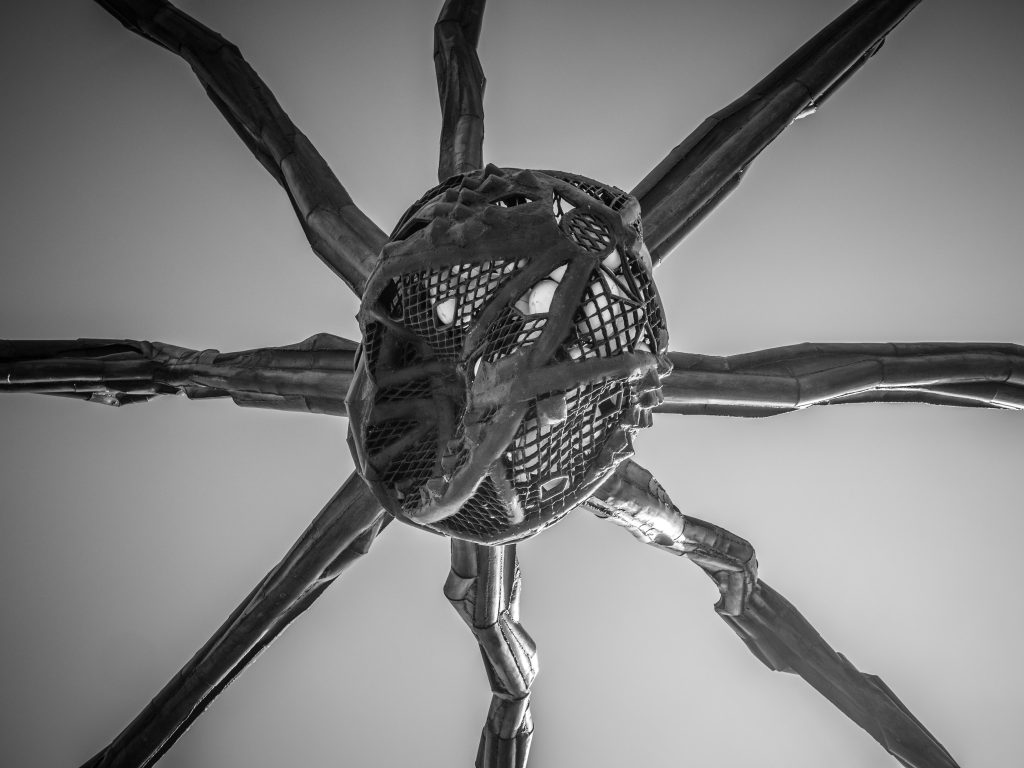
Looking up at the Maman statue outside the National Art Gallery in Ottawa, its towering, spider-like form becomes an intense study in contrast. The black and white frame emphasizes the intricate details of its legs and body, casting dramatic shadows that evoke both awe and vulnerability.
Ecce Homo by Caravaggio (?) at the Prado. I can hear the security guard now!
On my recent trip to Madrid, I had the chance to see the newly unveiled Ecce Homo at the Prado, a painting believed to be by Caravaggio. However, I find myself skeptical about its attribution. The dating places it in his later period in Naples, but stylistically, it resonates more with his earlier works, if at all. The strong use of light and shadow is reminiscent of Caravaggisti more than Merisi’s, and the way figures are treated, suggest echoes of his youth rather than his mature style. This disconnect raises questions about the complexities of dating and attributing art, especially works from such a turbulent time in Caravaggio’s career.
Ecce Homo—”Behold the Man.” A phrase uttered by Pilate, but in painting, it’s more than just a biblical moment. It’s an image of suffering, exposure, and recognition—or lack thereof. There’s something uncomfortable about these depictions: Christ, beaten and humiliated, made a spectacle before the crowd. He is both king and victim, sacred yet mocked. Artists have returned to this moment for centuries, not just to retell the Passion story but to wrestle with deeper questions about power, vulnerability, and what it means to really see another person.
The phrase Ecce Homo—“Behold the Man”—captures a profound theological paradox within the Passion narrative. Pilate’s words (John 19:5) seem to present Jesus both as the King of the Jews and as a humiliated criminal, crowned with thorns rather than a royal diadem. The inscription above Christ’s head on the cross (John 19:19), “Jesus of Nazareth, King of the Jews,” amplifies this irony. While Pilate’s statement could be seen more as a political gesture in the context of Roman authority and a question of Jesus’ messianic claims, the truth embedded in this moment transcends his intentions: Christ’s kingship is revealed through sacrifice, not earthly power. This tension invites deeper reflection on how we understand divine kingship—not as dominance, but as a vulnerability that paradoxically holds all power.
In Western Catholic painting, Ecce Homo serves as a profound visual commentary on the tension between Christ’s divine kingship and his earthly humiliation. Artists such as Caravaggio, Titian, and Rembrandt have captured the scene with an intensity that underscores this paradox. Christ, bound and crowned with thorns, is portrayed not just as a suffering man but as the focal point of redemption. In these works, the duality of his nature—both human and divine—becomes palpable, encouraging the viewer to confront their understanding of kingship, suffering, and salvation through the lens of Christ’s sacrifice.
The Ecce Homo theme, originating in early Christianity, traces a complex philosophical journey through humanism and beyond. In the Renaissance, it highlighted suffering as central to human dignity, a paradox of vulnerability and strength. This duality of human frailty and resilience persists in philosophical thought, provoking reflection on the nature of suffering, redemption, and the complexities of the human condition. The theme continues to influence thinkers, encouraging deeper exploration into how suffering shapes both individual and collective existence.
This tension in Ecce Homo is revealed through the way artists have engaged with the subject, using “picturing” as a tool to convey both divine kingship and human suffering. In the Renaissance, artists like Titian or Bosch often depicted Christ’s suffering with an air of quiet dignity, where his gaze, whether meeting ours or turning inward, suggests both presence and contemplation. In contrast, Caravaggio and the Baroque artists push the emotional intensity of the scene further, employing stark contrasts of light and shadow to amplify the rawness of Christ’s ordeal. These depictions do not merely visualize suffering; they invite the viewer to feel the violence, to hear the mocking crowd, to experience the visceral reality of Christ’s vulnerability. This technique shifts the act of “picturing” into a more embodied experience, bridging the divide between observer and the scene, compelling the viewer to confront the deeply human, yet paradoxically sacred, nature of the moment.
Nietzsche, of course, couldn’t resist borrowing the phrase, twisting it for his own purposes. His Ecce Homo wasn’t about suffering at all, but self-affirmation. A way of saying, “Here I am, on my own terms.” In a way, that’s the opposite of the Ecce Homo in painting, where Christ is stripped of control, turned into an object for others to judge. But maybe that contrast is the point. The paintings ask something of us—not just to look, but to decide what we see.
While the Lost Caravaggio: The Ecce Homo Unveiled exhibition at the Prado presents a newly discovered painting, I remain skeptical of its attribution to Caravaggio. Regardless of its origins, the theme of Ecce Homo remains a profound reflection on Christ’s suffering and kingship, deeply intertwined with theological exploration. This rediscovery encourages a broader dialogue about how this moment of humiliation, vulnerability, and sacrifice has been visualized across centuries. For more information, visit the Prado’s website.
Really enjoyed this work by Virgine Brunelle the other night at the National Art Centre. After a pretty awesome meal at 1Rideau I sat down for a sensory explosion of both visual and audio sensations.
In Fables, Virginie Brunelle creates a visceral exploration of chaos and resilience, where contemporary feminine archetypes collide in a raw, primal dance. Drawing from her background in violin, Brunelle intricately weaves rhythm and movement, pushing the boundaries of traditional dance. The performers’ bodies, mostly naked and raw, amplified by their breath and cries, move through a sonic landscape composed by Philippe Brault and performed live by Laurier Rajotte on the piano, embodying a world in turmoil yet yearning for hope and humanity.
A particularly striking element is the immersive audio experience in the opening set, where a cast member swings a microphone close to the dancers, amplifying their physicality. This not only heightened the intimacy of the piece but also allowed me to feel the dancers’ movements—every breath, every collision becomes a tactile experience. Very immersive. The live soundscape intertwines with the dancers’ raw physicality, drawing the audience deeper into the emotional urgency of the piece. This fusion of sight and sound creates a profound connection, turning the stage into a space where chaos, music, and movement converge in a shared sensory reality.
Or how I am spending too much time on ChatGPT. ChatGPT is now being incorporated into the Bing Search engine BTW.
And forget about the hand wringing about teachers being underpaid to read computer generated text or the oft-repeated end of the humanities, most dangerously, this will make it easier for people to write malware.
In terms of data literacy, literacy is literacy, right? So I asked ChatGPT to give me a simplified overview of what it does when a user types text into its interface. As an aside, I have been testing it with gibberish much akin to the Turkish thriller Hot Skull (see another post): communication (ergo civilization) depends on iterative translation of understandable context and content – the Chomskean reference in the first episode of the show, I assume.
As you can see below from ChatGPT’s response it is straight forward semantic analysis but this semiology is, to me, not the same as that for humans: machine semiotics ≠ human semiotics. But how is it different is what I am most interested by. Can machine dynamic semantics be trained solely using iterative utterance pairs? What can I learn about human learning from learning about machine learning trying to mimic human learning. Am I caught in a cyclical redundancy error?
When I receive a user's input, here is a more detailed explanation of the process I go through:
For example, I know that verbs are often used to describe actions or states of being, while nouns are used to name people, places, or things. Adjectives are used to describe nouns, and adverbs are used to describe verbs, adjectives, and other adverbs.
1. Tokenization: The first step is to split the input into individual words and punctuation marks, a process called tokenization. This allows me to analyze the input at the word level.
2. Part-of-speech tagging: Next, I assign a part of speech (such as noun, verb, adjective, etc.) to each word in the input, based on its definition and its role in the sentence.
3. Dependency parsing: I then analyze the relationships between the words in the input, taking into account their grammatical roles and the structure of the sentence. This allows me to understand the meaning of the sentence as a whole.
4. Sense disambiguation: If a word has multiple meanings, I use the context of the sentence and the rest of the input to determine which meaning is most appropriate.
5. Entity recognition: I also try to identify any named entities (proper nouns) in the input, such as people, places, and organizations.
6. Response generation: With all of this information, I can then use my knowledge and understanding of language to generate an appropriate response. This might involve looking up information, using my pre-defined responses to similar inputs, or using my understanding of the user's intentions to formulate a response.
In order to determine the role that a word is playing in a sentence (also known as its part of speech), I use my understanding of grammar and the relationships between words.
By analyzing the relationships between words in a sentence and their definitions, I can determine the part of speech of each word and understand the overall meaning of the sentence.
I followed up with a question about what item 4 was, which seems a key step in its assignation. How does it connect content with context?
Sense disambiguation is the process of identifying the correct meaning of a word in a given context. Words can often have multiple meanings, and it's important to choose the right one in order to understand the intended meaning of a sentence.
For example, the word "bass" can be a noun referring to a type of fish, or it can be a noun referring to a low-frequency sound or a range of notes in music. In order to disambiguate the sense of the word, it's necessary to consider the context in which it is used. If the word appears in a sentence about music, it is more likely to refer to a range of notes, while if it appears in a sentence about fishing, it is more likely to refer to a type of fish.
There are a number of techniques that I can use to disambiguate the sense of a word, including analyzing the surrounding words and phrases, considering the overall topic of the conversation, and using my general knowledge about the world. By using these techniques, I can choose the most appropriate meaning for a word and better understand the intended meaning of the sentence.
I asked ChatGPT is come up with the plot for a cop buddy movie between a person (me) and an AI program. While not going to win points for originality, I am really intrigued by the two “mishaps and misadventures”, i.e. fire alarm and the vending machine.
I’m also interested that I didn’t provide the name or gender of the AI but I wonder if the word “sassy” would have been used if the name chosen wasn’t a “feminine” name. This may be an example of learned bias being reinforced.
The movie follows the adventures of two unlikely partners: a bumbling police detective named Michael and a sassy artificial intelligence named Alice. When Michael is assigned to a high-profile case involving a string of robberies, he is paired with Alice, a newly developed AI designed to assist with investigations.
At first, Michael is skeptical of Alice's capabilities and unwilling to trust a machine to help with his work. But as they team up to track down the perpetrators, Michael starts to see that Alice is more than just a machine - she is a valuable partner with her own unique skills and insights.
As they work together to solve the case, Michael and Alice encounter a series of hilarious mishaps and misadventures, including accidentally setting off the building's fire alarm while trying to hack into a computer, and getting into a heated argument with a vending machine over the price of a snack.
Despite the challenges they face, Michael and Alice always manage to come out on top thanks to their combined wit and determination. In the end, they successfully crack the case and bring the perpetrators to justice, becoming the most unlikely crime-solving duo in the city. As they celebrate their victory, Michael realizes that he has learned to appreciate and trust Alice's unique abilities, and the two vow to continue working together to keep the city safe and laughing.