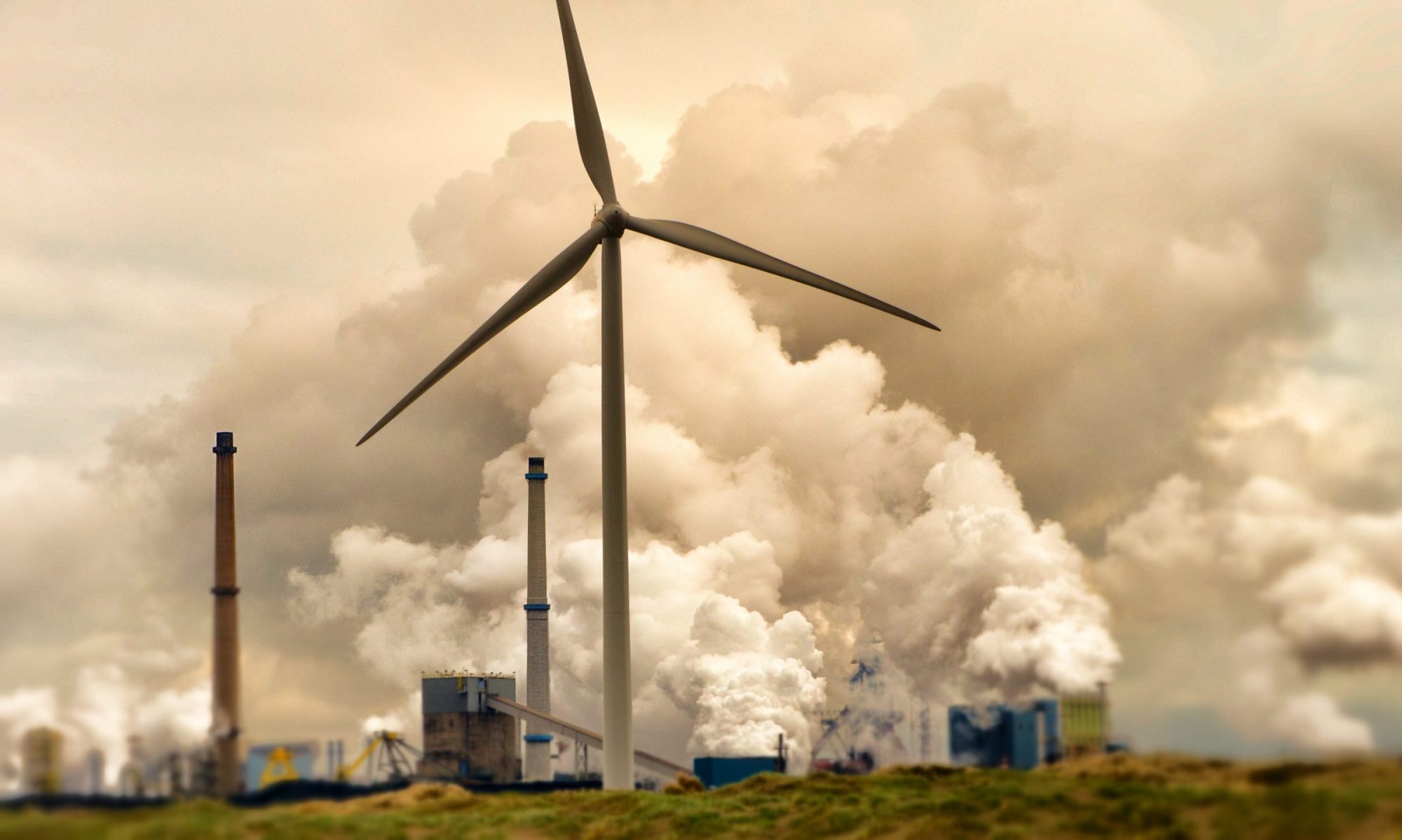


The most important assumption embedded in the AI boom is not that intelligence demand will grow. It is that intelligence will remain centralized. This assumption is rarely examined because it has been inherited from the economics of fossil fuels and cloud computing. Yet the rise of local models raises the possibility that intelligence may increasingly resemble renewable energy: abundant, distributed, and locally generated. If so, the consequences extend far beyond technology markets. They would reshape the geography of power itself.
The artificial intelligence boom rests on a surprisingly narrow assumption. Across financial markets, technology firms, governments, and the media, there is broad agreement that demand for computation will continue rising for years, perhaps decades. This expectation underpins hundreds of billions of dollars in investment in data centres, power generation, semiconductor fabrication, and the infrastructure required to support them. Every new hyperscale facility is celebrated as evidence of an inevitable future.
Yet the AI boom assumes more than rising demand. It assumes that intelligence itself will remain centralized.
History suggests this distinction matters. The most consequential technologies are often remembered not for what they did, but for how they were organized. Coal transformed the nineteenth century because it created new relationships between capital, labour, and the state. Oil reshaped the twentieth because its production favoured scale, concentration, and control over strategic resources. The internet altered communication because it reorganized the architecture through which information flowed. Infrastructure, not technology alone, determines who holds power and who depends on whom.
This perspective echoes a broader insight found in the work of Adam Tooze (see my review of his LRB speech from last year) and earlier scholars such as Lewis Mumford and Thomas P. Hughes. Modern power is exercised through infrastructure. Energy systems, financial networks, logistics chains, communications platforms, and technical standards shape economic and political outcomes as surely as governments or markets. The central question is not who possesses resources, but who controls the systems upon which others depend.
Viewed this way, artificial intelligence appears less as a technological breakthrough than as the latest chapter in a much older story. The critical issue is not whether AI becomes more capable. It is whether AI reinforces an existing logic of concentration or introduces a new logic of distribution.
Technological revolutions are often portrayed as disruptions that overturn existing hierarchies. More often, they reinforce them. The industrial revolution concentrated production in factories. Electrification produced centralized grids. The oil economy elevated a small number of producers, refiners, and states to strategic importance. In each case, the enduring consequences flowed from the infrastructure surrounding the technology rather than the technology itself.
Artificial intelligence may prove no different. Today’s debate is dominated by benchmarks, reasoning capabilities, and the race toward increasingly powerful models. Future historians may care less about which model first surpassed a particular threshold than about who owned the computational infrastructure, who controlled access to intelligence, and who captured the resulting economic rents.
The current trajectory clearly favours concentration. Frontier AI models require enormous amounts of capital, energy, specialized hardware, and technical expertise. These requirements create formidable barriers to entry and strengthen the position of a small number of firms whose advantages compound over time. More compute produces better models; better models attract more users and investment; investment finances still larger infrastructure. Scale begets scale.
The pattern closely resembles the political economy of fossil fuels. Oil production rewarded concentration because extraction, refining, and distribution required large-scale infrastructure. The result was not merely economic power but geopolitical influence. Control over energy became a source of leverage; access became a strategic concern. Contemporary discussions of AI increasingly adopt the same language. Semiconductors are treated as strategic assets. Data centers are becoming critical infrastructure. Electricity generation is framed as a prerequisite for national competitiveness.
Yet there is another possibility. While investment flows toward larger centralized systems, local AI models are improving at extraordinary speed. Tasks that recently required cloud-scale resources can increasingly be performed on consumer hardware. More efficient models, better chips, and advances in compression are steadily reducing computational requirements.
This raises a question largely absent from current forecasts: what if intelligence follows a trajectory closer to renewable energy than fossil fuels?
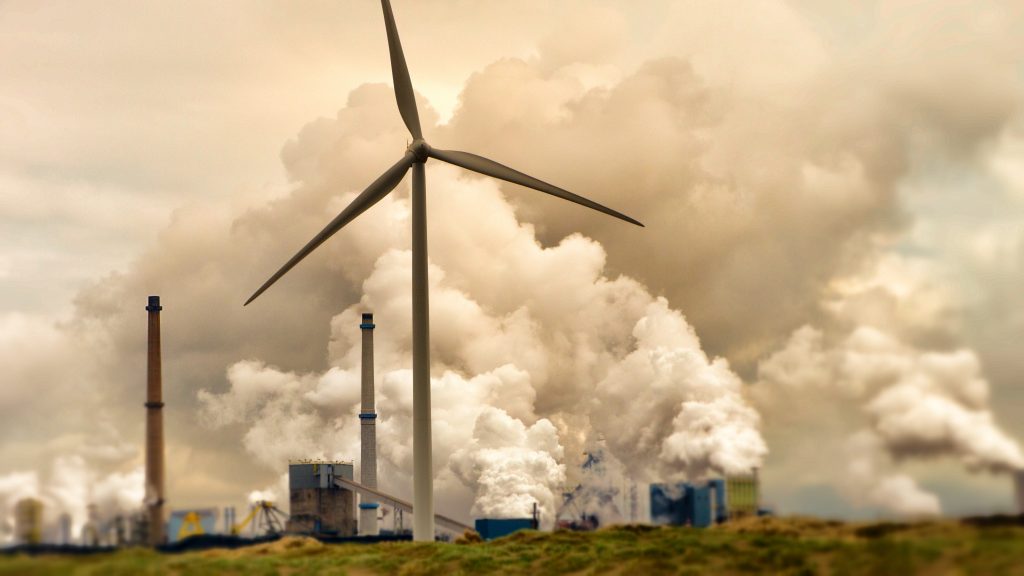
The comparison is ultimately about power. Oil is concentrated; solar is distributed. Oil creates dependency because production is controlled by a relatively small number of actors. Solar reduces dependency by allowing energy to be generated where it is consumed. The transition from fossil fuels to renewables is therefore not merely an energy transition; it is a transformation in the architecture of power.
A similar distinction may emerge in AI. Frontier models resemble large power stations, requiring immense capital and centralized infrastructure. Local models resemble distributed generation. They may not match frontier performance, but they offer advantages in autonomy, resilience, privacy, and cost.
The conventional response is that efficiency increases demand. Following Jevons (Jevon’s Paradox), many argue that cheaper AI will simply generate more AI usage, just as cheaper storage produced more data and cheaper computation produced more software. This is likely correct. But it misses the crucial point. Efficiency can increase demand while simultaneously changing where that demand is satisfied.
The rise of personal computers increased demand for computation without requiring all computation to remain centralized. Smartphones expanded computing while placing substantial capability directly into users’ hands. Growth and distribution are not mutually exclusive.
The key question, therefore, is not whether demand for intelligence will grow. It almost certainly will. The more important question is whether that demand requires centralized infrastructure. Most users do not need frontier performance; they need systems that are good enough. If local models satisfy most everyday tasks, intelligence may become increasingly distributed even as overall demand continues to rise.
The implications extend far beyond technology markets. Infrastructure shapes political and economic power. A world dominated by centralized AI would deepen dependence on a small number of firms and states. A world of widely distributed intelligence would produce a different balance between autonomy and dependency, concentration and diffusion.
The most important assumption embedded in the AI boom is not that demand for intelligence will continue growing. It is that intelligence will remain centralized. If that assumption proves wrong, the consequences will extend far beyond technology. They will reshape the political economy of computation and, potentially, the geography of power itself.
This argument builds most directly on the work of Lewis Mumford and Thomas P. Hughes. In Technics and Civilization (1934), Mumford argued that technologies are never merely technical; they embody social and political choices, often reinforcing either centralized or decentralized forms of power. Hughes, in Networks of Power: Electrification in Western Society, 1880–1930 (1983), shifted attention from individual inventions to the large technological systems that emerge around them, showing how infrastructure, institutions, capital, and governance become inseparable. Together, they suggest that the key question about AI is not how intelligent it becomes, but what kind of system it creates. This perspective has been extended by Alfred Chandler (The Visible Hand, 1977), Manuel Castells (The Rise of the Network Society, 1996), James C. Scott (Seeing Like a State, 1998), Timothy Mitchell (Carbon Democracy, 2011), David Edgerton (The Shock of the Old, 2006), and more recently Adam Tooze, all of whom examine how infrastructure shapes economic, political, and social power.